01
Understand Humidity
Air contains varying amounts of water vapor. The amount available for collection depends on local humidity and temperature.
Joseph's Well is a step-by-step DIY guide for people interested in atmospheric water generation. Learn about the water-from-air concept, explore project instructions, and understand how commonly available materials may be used in a home-built system.
Joseph's Well is a digital guide, not a ready-made water-generating appliance.

Joseph's Well is presented as a digital instructional guide that explains how to explore a DIY atmospheric water system. The idea is to help beginners understand the principles involved before taking on a build of their own.
Atmospheric water generation uses moisture already present in the air. In condensation-based systems, air is cooled so that some of its water vapor turns into liquid droplets. A working project also requires suitable components, a way to collect the water, appropriate power, and careful water-quality management.
The concept is based on a natural physical process. Here is a simplified look at the stages involved in a condensation-based atmospheric water system.
Air contains varying amounts of water vapor. The amount available for collection depends on local humidity and temperature.
When humid air meets a sufficiently cool surface, it can reach its dew point and water vapor can condense into droplets.
A suitable collection arrangement directs the condensed moisture into a reservoir while limiting contact with contaminants.
Water intended for drinking needs appropriate treatment, clean handling, suitable storage, and testing for relevant hazards.
Explore the key areas relevant to a DIY atmospheric water project. Check the official product page for the current package contents and exact delivery format.
A structured approach intended to help readers follow the general process of understanding and planning a DIY system.
Learn what to look for when reviewing component requirements, sourcing parts, and preparing for a hands-on project.
Explore how water vapor becomes liquid water and why temperature and humidity matter to atmospheric water collection.
Understand why airflow and cooling can require energy and why any proposed mains, battery, or solar configuration needs careful planning.
The guide is aimed at everyday people who want to learn about the concept without starting with advanced technical theory.
Recognize the importance of appropriate treatment, sanitary materials, clean collection, and testing before drinking water from a home-built system.
Joseph's Well is a guide for exploring a water-from-air project, not a finished machine delivered to your home. You should expect to review the instructions, check the materials, assess your environment, and determine whether the project is suitable for your skills and circumstances.
Visit the official website to review the current guide description, package details, purchasing terms, and any included learning resources before making a decision.
View Official Product DetailsLearning about atmospheric water generation can help you assess whether this type of project belongs in a broader water preparedness or self-reliance plan.
Learn the underlying condensation concept and the basic considerations involved in a water-generation project.
Investigate a project built around instructions and material planning rather than purchasing a complete commercial appliance.
Use what you learn to compare atmospheric water generation with other options for household resilience and emergency planning.
A DIY guide may be useful for learning, but the finished system's practical performance depends on many factors beyond the guide itself.
Water collected from air can be affected by airborne pollutants, system materials, dirty surfaces, storage containers, and microbial growth. Do not assume clear-looking water is potable. Use an appropriate treatment approach and suitable water testing before drinking it. Follow recognized drinking-water guidance and seek qualified advice where needed. Keep a dependable supply of verified safe water for emergencies.
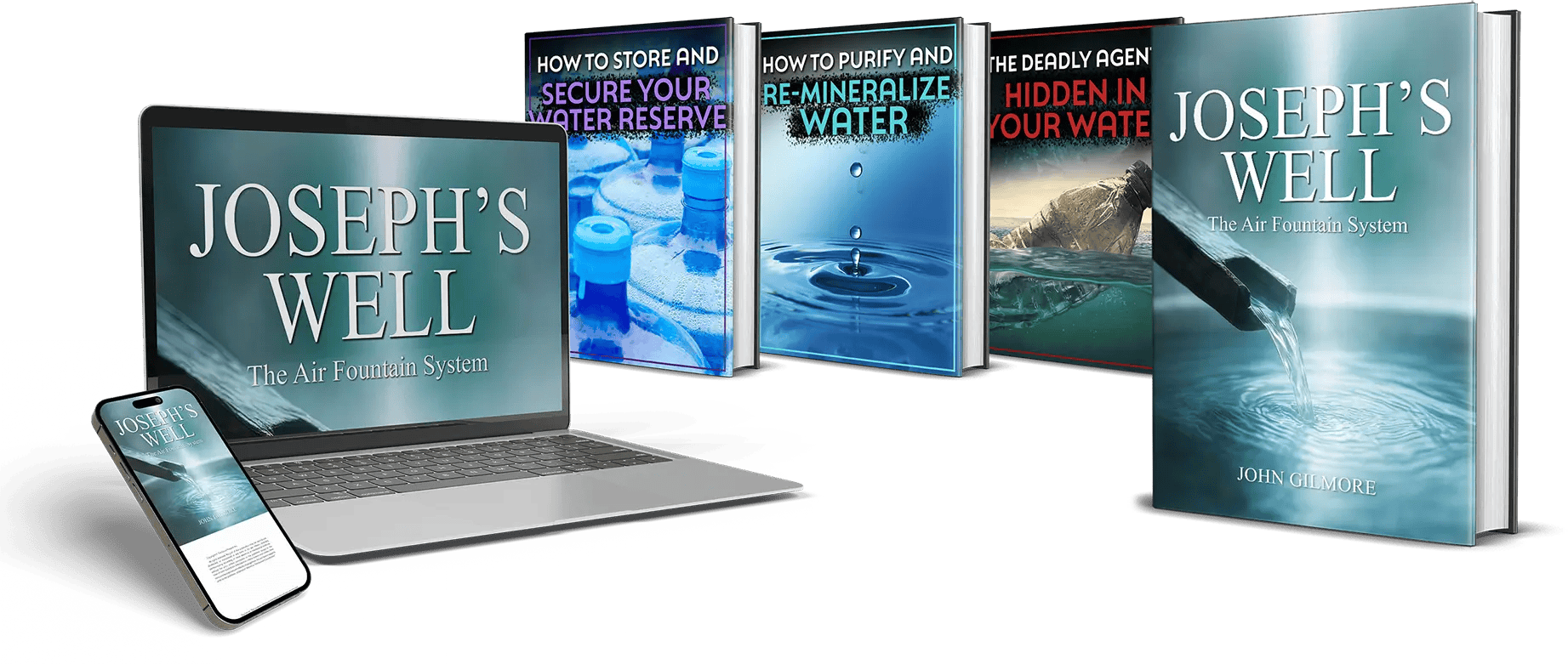
The supplied bonus image presents additional water-related learning materials alongside Joseph's Well. These resources may be relevant to people who want to learn about water storage, purification concepts, and household water preparedness.
The exact bonus titles, availability, and inclusion terms should be confirmed on the current official offer page. Review the package description so you know what is included with your purchase.
Check the Official PackageGet a clearer understanding of the guide, the atmospheric water-generation process, and key considerations before starting.
Joseph's Well is a digital DIY guide intended to teach readers about building an atmospheric water system using instructions and commonly available materials. It is not a ready-made machine shipped to your home.
In a condensation-based system, air is cooled so that water vapor can condense into liquid droplets. The resulting water must be collected, appropriately treated, and stored hygienically.
The guide is described as beginner-oriented. However, the difficulty of building a functioning system depends on the actual instructions, the components involved, your skills, and safe handling of any electrical or cooling equipment. Review the full details before starting.
There is no universal output figure for all builds. Production depends on humidity, temperature, equipment design, airflow, cooling capacity, and energy availability. Check whether the official guide provides independently supported performance information for its proposed design.
Not automatically. Airborne contaminants, collection surfaces, tubing, reservoirs, and microbial growth can affect water quality. Use suitable treatment and testing before drinking water from a DIY system.
Off-grid use depends on the specific design and its power requirements. Cooling and airflow can consume energy, so a solar or battery setup needs to be sized for the actual load and expected operating conditions.
Review the current package contents, delivery format, required tools and materials, likely extra costs, support arrangements, refund conditions, and any evidence behind performance claims. Confirm the terms on the official website before ordering.
Visit the official Joseph's Well website to review the current description, package contents, and purchasing terms.
Explore Joseph's Well to learn more about the DIY guide, review the current package details, and decide whether this atmospheric water-generation project aligns with your interests and requirements.
Visit Joseph's Well TodayReview the current product description and terms before purchasing.